
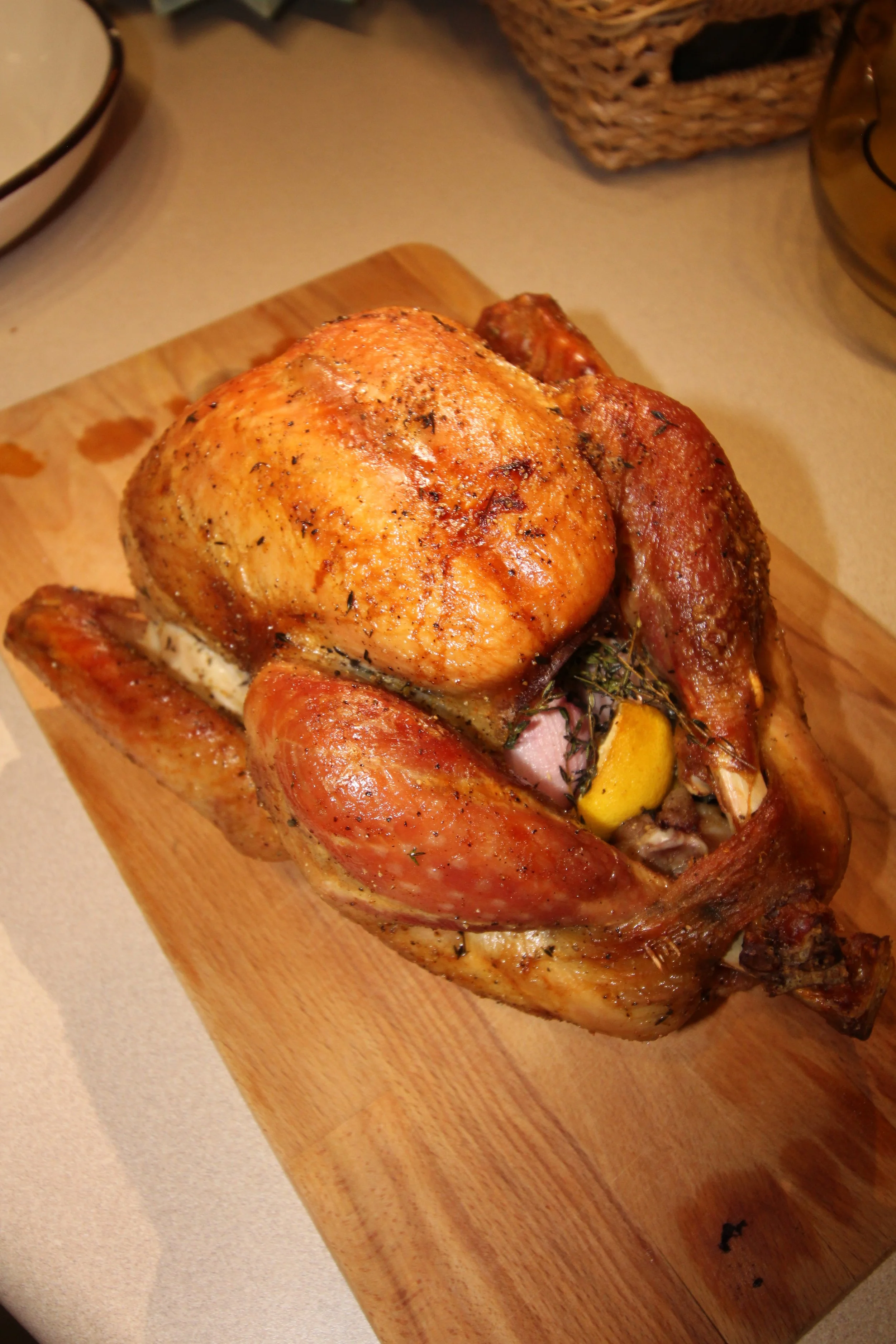
(Near perfect) Thanksgiving Turkey- If you aspire to be the turkey guy every year, this recipe is for you. It consistently gets rave reviews, year-round requests, and it’s as low-effort as a turkey can realistically be. What makes this recipe a success is a long dry brine and no butter during cooking (gasp).
12-14 lb turkey
1/3 cup kosher salt
1/3 cup light brown sugar
4 lemons
1 bunch fresh thyme
1 bunch fresh sage
2 tbsp freshly cracked black pepper
2 bulbs of garlic
2 yellow onions or 8 shallots
½ cup olive oil, sunflower oil, etc
**Preparation is very important for turkey. 9/10 times you’re going to come home with a frozen one and if you don’t know, it will take days to thaw (roughly 3).
Once your turkey is fully thawed, pull it out of the package and remove the neck and innards from inside the cavity. Save both of them if you wish, but definitely save the neck for making broth. Give your turkey a rinse if that’s your thing and then pat it dry with paper towels. Place it on a baking sheet lined with a wire rack. It’s okay if you don’t have one, straight on the baking sheet is fine.
Strip the leaves from 6-8 sprigs of thyme. Add thyme, brown sugar, kosher salt, black pepper, and zest from 2 lemons in a small bowl.
Gently rub the brine mixture all over your turkey, taking care to get in the crevices and inside the turkey as well.
Store uncovered in your fridge for 48-72 hours, but no less than 24.
On the day you’re cooking your turkey, remove it from the fridge and let it come to room temperature for 2-3 hours.
Preheat oven to 325. Transfer to a roasting pan or a clean baking dish lined with a wire rack.
Slice onions, halve garlic bulbs, quarter all 4 lemons, and collect your herb bunches. Stuff the turkey with halves of 1 garlic bulb, sage and thyme bunches, onions, and a few lemon quarters. Scatter the remaining garlic, onion, and lemon around your turkey in the pan. There isn’t a specific science to what gets stuffed in your turkey, just a little of everything that will fit with the herbs. I don’t tuck my turkey wings because I like how crispy and almost burnt they get, but you’re more than welcome to. Just gently bend each wing up and back behind the turkey, guiding the tips into place to hold them there (like folding your arms behind your head). You can truss the legs together with a bit of cooking twine, but don’t stress about it. It’s purely aesthetic.
Thoroughly brush cooking oil over your turkey, making sure every inch is coated before going into the oven. Set leftover oil aside to baste turkey again during cooking.
Roast uncovered for 3-4 hours, rotating the pan halfway through and basting with oil again. I usually hit right at 15 minutes per pound in my oven, so that’s 3.5 hours for a 14 lb turkey. Your turkey is done when a thermometer reads 165 placed in the innermost part of the thigh. Alternatively, you can pierce the inner part of the thigh with a knife and look for the juices to run clear. If it’s a couple of degrees short of 165, it will come to temp while resting.
Remove your turkey from the oven and let cool before handling lest you want to burn yourself.
Once you can move your turkey onto a cutting board or platter, you can reheat your roasting pan on your stovetop. Add a little water to deglaze, scraping the pan with a spatula to get all the good bits. Strain out the solids and transfer pan drippings to a container and set aside for gravy.
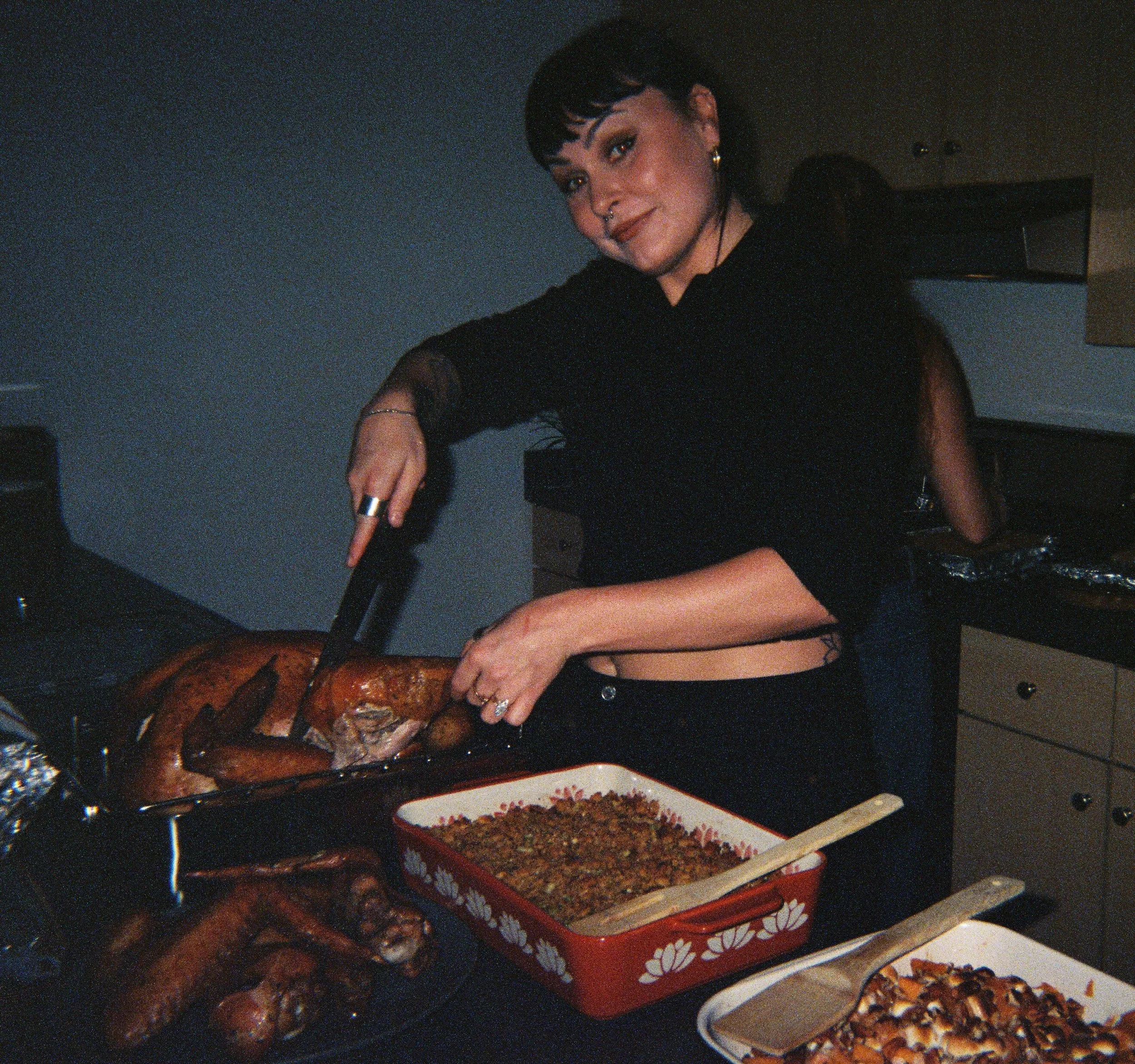
Basic Turkey Gravy
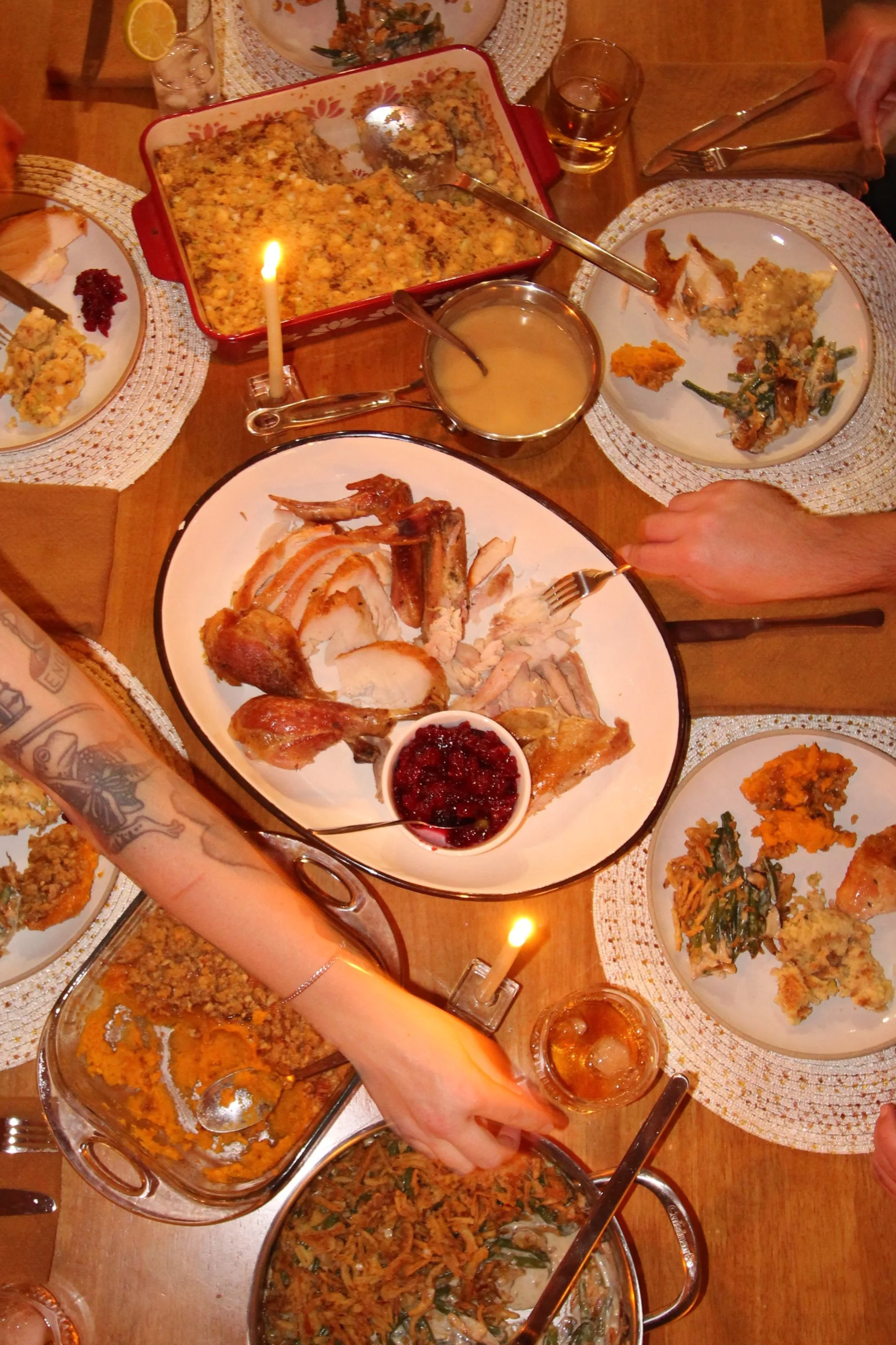
Everyone has their own gravy. I’m not here to sell you on some browned butter miso gravy that is definitely not as good as your grandmother’s. I’m here to give you a basic gravy recipe that you can do a multitude of things to for it to suit your tastes.
¼ cup all-purpose flour
¼ cup butter
4 cups turkey broth mixed with pan drippings
Heat butter over medium heat in a sauce pan.
Once melted, add flour and whisk constantly for roughly 3 minutes until the flour is cooked and golden brown.
Add in broth a little at a time, whisking as you add it. Let it come to a simmer to fully incorporate.
Taste the gravy and season with salt and pepper to taste.
*Recommendations:
You can add more herbs like finely chopped sage or thyme. If you want to deepen the flavor and add umami, add Worcestershire or soy sauce a little at a time. If you like a little tang, try a teaspoon of Dijon mustard or a couple tablespoons of apple cider or Sherry vinegar.